

Clear communication is the foundation of an inclusive workplace. But let’s face it—most company policies aren’t written with inclusion in mind. Overstuffed with jargon, legal language, or cultural assumptions, they can confuse or alienate employees from different backgrounds, language abilities, or neurocognitive styles. That’s where cartoons come in. Used strategically, cartoons help simplify complexity while also making policies more relatable, equitable, and human.
In this article, we explore how using cartoons to simplify workplace policies can promote accessibility, fairness, and understanding across diverse teams.
→ Our full guide: Using Cartoons to Support Diversity, Inclusion & Belonging
Why Traditional Policies Often Exclude and How Cartoons Can Help Simplify Workplace Policies
Even well-intentioned workplace policies can miss the mark. Legal teams aim for compliance, HR wants fairness, and leadership wants alignment—but the result is often a dense document few people understand and even fewer relate to.
Key issues that affect inclusion:
- Use of formal, inaccessible language
- Assumptions about cultural norms (e.g., dress codes, timekeeping)
- Lack of real-life examples or context
- Rules presented without empathy or flexibility
These challenges disproportionately affect:
- Neurodivergent employees
- Non-native English speakers
- Multicultural and global teams
- Staff with lower literacy or different learning preferences
How Cartoons Help Make Policies More Inclusive
Cartoons are not just about clarity—they’re a powerful tool for tone, accessibility, and emotional connection, especially when using cartoons to simplify workplace policies that might otherwise exclude. Here’s how they help:
- Visualize what’s expected instead of relying on dense text
- Depict inclusive scenarios, showing a range of identities and roles
- Disarm defensiveness with gentle humor or irony
- Break down barriers for visual learners, especially neurodivergent team members
- Provide context that words alone can’t always deliver
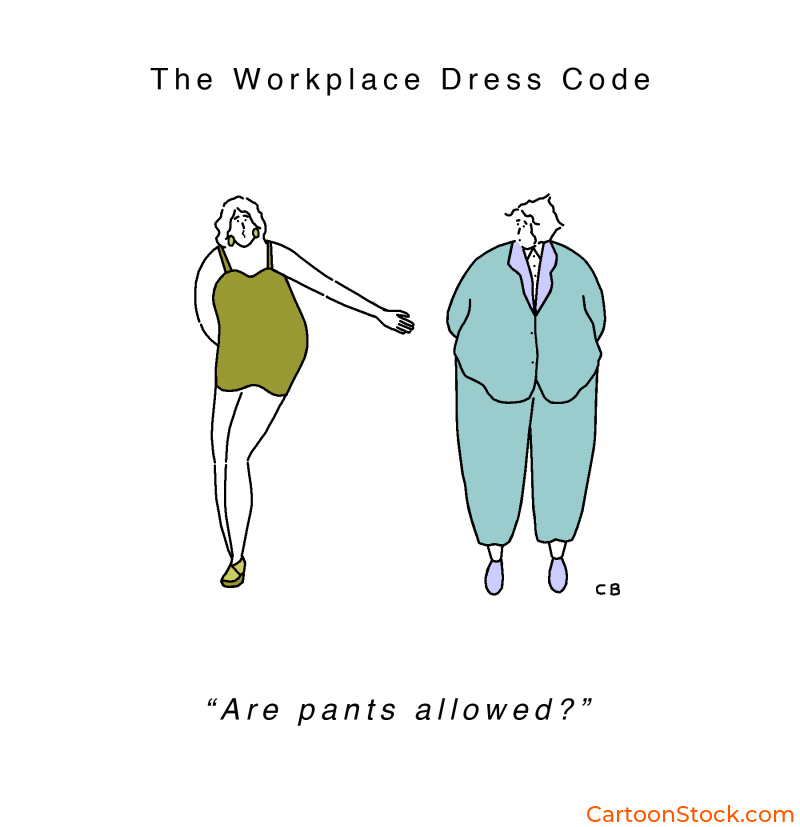
One example that captures the value of cartoons in making policies more inclusive is Christopher Burke’s cartoon featuring two employees; a woman in a dress asking, “Are pants allowed?” while a suited female colleague stands nearby. It gently highlights the confusion and bias that can exist in corporate dress codes—especially for women, nonbinary staff, or anyone who doesn’t fit traditional gender norms. For neurodivergent employees, visuals like this can clarify unspoken expectations and open the door for thoughtful discussion about fairness, flexibility, and self-expression in workplace attire.
Where to Use Cartoons in Policy Communication
Cartoons are especially effective when placed:
- At the beginning of a dense section to set a welcoming tone
- Next to policies involving sensitive topics (appearance, conduct, accommodations)
- In onboarding documents to help new hires engage – When using cartoons to simplify workplace policies, they work especially well in visual-first training materials or internal comms for multilingual teams.
- In multilingual settings where visual cues aid comprehension
- As visual reinforcement in digital signage or internal email reminders
Tips for Using Cartoons to Support Policy Inclusion
To ensure your visuals are truly inclusive:
- Avoid stereotypes: Characters should reflect diversity in race, gender, age, ability, and role
- Match the cartoon to the cultural context: Don’t rely on idioms or inside jokes
- Use plain captions: Simple language supports ESL and neurodivergent readers
- Prioritize accessibility: High-contrast visuals, descriptive alt text, and clean design
- Reinforce values: Cartoons should align with your workplace’s tone and culture
Q&A: Cartoons and Inclusive Policy Design
Q: How do cartoons make dense policies more accessible?
A: Cartoons improve visual engagement and reduce cognitive load. They help convey intent, not just rules, especially for visual learners.
Q: Can humor be risky in policy materials?
A: Not if it’s used respectfully. Cartoons don’t have to be laugh-out-loud funny—they can simply illustrate situations in a relatable way.
Q: What makes a cartoon “inclusive”?
A: Inclusive cartoons reflect a diversity of identities and avoid reinforcing stereotypes. They use tone and visuals that are welcoming to all employees.
Keep Reading:
Next Article: The Role of Cartoons in Building Belonging Across Hybrid & Remote Teams