

Why Editorial Cartoons Still Matter in Digital Publishing
In an era of viral videos and instant memes, you might think the humble editorial cartoon would feel outdated. A single-panel drawing with a pointed caption? Quaint, right?
Wrong.
Editorial cartoons in publishing remain one of the most powerful tools in a media outlet’s arsenal. They cut through noise, distill complex issues into visceral images, and spark conversations that text alone rarely achieves. From legacy newspapers to digital-only platforms, editorial cartoons continue to drive reader engagement, build brand identity, and yes, even convert casual browsers into paying subscribers.
But the landscape has shifted dramatically. The economics have changed. The sourcing strategies have evolved. And the role cartoons play in modern journalism looks different than it did even a decade ago.
This guide explores how editorial cartoons function in today’s publishing world—from both the cartoonist’s and the publisher’s perspective. Whether you’re curious about how outlets use cartoons strategically, how cartoonists make a living, or how digital platforms are reinventing the medium, you’ll find the full picture here.

How Publications Use Editorial Cartoons Strategically
Editorial cartoons aren’t just filler content between op-eds. Smart publishers deploy them as strategic engagement tools that serve multiple functions: breaking up text-heavy opinion sections, providing shareable social media content, and giving readers a quick, memorable take on the day’s biggest stories.
The visual punch of a well-executed cartoon can stop a scrolling reader mid-swipe. It can make a complex policy debate instantly graspable. And importantly, it gives publications a distinctive voice that text commentary alone can’t quite capture.
Different outlets use cartoons in different ways. Some anchor their entire opinion identity around a stable of recognizable cartoonists. Others rotate syndicated content to keep perspectives fresh. A growing number are experimenting with cartoon-driven newsletters and social-first formats designed specifically for digital consumption.
The common thread? Publications that use editorial cartoons intentionally see measurable benefits in reader engagement, time-on-page, and social sharing metrics.
Read more: How Newspapers and Magazines Use Editorial Cartoons for Reader Engagement
The Business Side: How Cartoonists Actually Get Paid
Here’s the uncomfortable truth about editorial cartooning: it’s not an easy way to make a living. But it is possible—if you understand the economics and career path decisions that come with the territory.
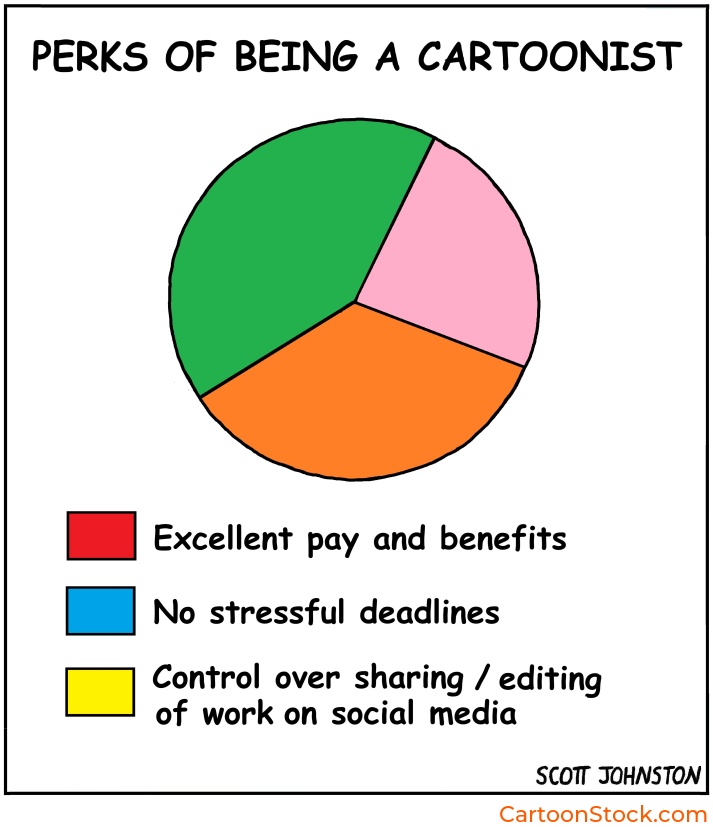
Cartoonists generally fall into two camps: staff positions and freelance work. Staff cartoonists are increasingly rare, usually working for major metro dailies or national outlets. They enjoy steady paychecks, benefits, and the security of a full-time gig. They also face the pressure of producing consistent, high-quality work on tight deadlines, often under editorial oversight.
Freelancers, on the other hand, hustle. They pitch to multiple outlets, juggle varying pay rates (which can range from laughably low to surprisingly decent), and live without benefits or job security. But they also maintain creative control, build diverse portfolios, and can potentially out-earn staff cartoonists if they land enough clients.
The freelance-vs-staff decision isn’t just about money. It’s about lifestyle, creative freedom, risk tolerance, and long-term career goals. And in today’s media landscape, where staff positions are vanishing and digital opportunities are exploding, many cartoonists are finding hybrid models that blend the best of both worlds.
Read more: Freelance vs. Staff Cartoonist: Economics and Career Path Decisions
Digital Platforms and Subscription-Driven Cartoon Strategies
Print circulation is declining. Digital subscriptions are rising. And editorial cartoons are quietly becoming secret weapons in the battle for paying subscribers.
Forward-thinking digital publications have figured out that cartoons aren’t just content—they’re conversion tools. A shareable cartoon on social media drives traffic. A cartoon-led newsletter keeps readers opening emails. A behind-the-scenes look at a cartoonist’s process creates subscriber exclusivity and loyalty.
Some platforms are experimenting with interactive cartoons, animated formats, or even reader-submission cartoon contests. Others are packaging cartoon archives as premium subscriber perks. The smartest are using cartoons as their primary social media hook, driving free readers into paywalled content through sheer visual appeal.
The key insight? In a crowded digital landscape, editorial cartoons offer something text can’t: instant impact, scroll-stopping visuals, and emotional resonance that converts casual visitors into committed subscribers.
Read more: Digital Publication Cartoon Strategies That Drive Subscriptions
Building a Recognizable Editorial Voice Through Cartoons
Consistency matters in publishing. Readers return to outlets they trust, whose perspectives they understand, whose voices feel familiar. And editorial cartoons play a surprisingly significant role in establishing that identity.
Think about it: a publication’s cartoon style and editorial stance become part of its brand. The New Yorker’s cartoons feel distinctly New Yorker. Political magazines telegraph their ideological leanings through their cartoon choices. Local papers build community connection through cartoonists who understand regional issues and inside jokes.
When a publication maintains a consistent editorial voice and visual style through its cartoons, it creates recognition. Readers know what they’re getting. They develop loyalty to specific cartoonists. They look forward to that weekly cartoon the way they look forward to a favorite columnist.
This consistency doesn’t mean monotony. It means editorial coherence. It means cartoons that align with the publication’s values, speak to its audience, and reinforce its unique position in the media landscape.
Read more: Building Readership Through Consistent Editorial Voice and Visual Style
Editorial Cartoons in Modern Journalism: More Than Just Opinion
There’s a common misconception that editorial cartoons are merely opinion pieces with pictures. That undersells their role significantly.
Editorial cartoons function as visual journalism. They synthesize news, offer commentary, challenge power, and hold public figures accountable—all in a single frame. At their best, they do what long-form investigative pieces do: they reveal truth, spark conversation, and shift perspectives.
In modern newsrooms, editorial cartoons occupy a unique space. They bridge the gap between hard news and opinion. They give readers a moment of reflection (or outrage, or laughter) in an otherwise overwhelming news cycle. They provide historical record—decades from now, editorial cartoons will document how society viewed today’s events.
And importantly, they maintain journalism’s watchdog function. A biting editorial cartoon can accomplish what ten op-eds can’t: it makes corruption, hypocrisy, or absurdity impossible to ignore.
The role of editorial cartoons in journalism isn’t shrinking. It’s evolving. And publications that understand this continue to invest in cartoon content as a core part of their editorial mission.
Read more: The Role of Editorial Cartoons in Modern Journalism and Opinion Pages
How Publications Actually Source Their Cartoons
So where do all these cartoons come from? The sourcing landscape is more complex than you might think.
Some publications employ staff cartoonists (though these positions are increasingly rare). Others work with regular freelance contributors who pitch ideas or submit work on contract. Many license cartoons from syndicates—companies that distribute work from hundreds of cartoonists to thousands of outlets.
Then there’s the direct licensing model, where publications browse online cartoon libraries (like CartoonStock), purchase one-time or subscription rights, and select cartoons that fit their editorial needs. This approach offers flexibility, cost control, and access to an enormous range of styles and perspectives.
Each sourcing method has trade-offs. Staff cartoonists provide consistency but cost more. Freelancers offer fresh voices but require management. Syndicates provide convenience but less exclusivity. Direct licensing offers choice but requires editorial judgment.
The best publications often use a mix—staff or regular contributors for signature cartoons, supplemented with syndicated or licensed work for variety and broader coverage. The key is matching sourcing strategy to editorial goals, budget realities, and audience expectations.
Read more: How News Outlets Source Editorial Cartoons
The Future of Editorial Cartoons in Publishing
Editorial cartoons aren’t going anywhere. But they are transforming.
The medium is adapting to digital platforms, experimenting with animation and interactivity, and finding new audiences on social media. Cartoonists are building direct relationships with readers through Patreon, Substack, and Instagram. Publications are discovering that cartoons drive engagement metrics in ways that surprise even seasoned editors.
The economics remain challenging. The competition is fierce. But for both cartoonists and publishers willing to innovate, editorial cartoons in publishing represent opportunity—not obsolescence.
The outlets that thrive will be those that understand cartoons aren’t just nostalgic holdovers from print’s heyday. They’re dynamic, evolving content forms that speak to how modern audiences consume and share information.
And the cartoonists who succeed will be those who master both craft and business, who understand publishing from the inside, and who recognize that great cartooning has always been about more than drawing skills—it’s about insight, timing, and knowing your audience.
Q&A: Common Questions About Editorial Cartoons in Publishing
Q: Do editorial cartoons actually increase reader engagement?
Yes. Studies and publisher data consistently show that editorial cartoons drive higher engagement rates than text-only content. They’re more likely to be shared on social media, commented on, and remembered long after publication.
Q: How much do publications pay for editorial cartoons?
It varies wildly. Staff cartoonists at major outlets might earn $50,000-$100,000+ annually. Freelance rates range from $50 for small publications to $500+ for national outlets. Syndication and licensing payments depend on circulation and usage terms.
Q: Can small publications afford editorial cartoons?
Absolutely. Many cartoonists offer tiered pricing. Syndication services and licensing platforms provide affordable access to professional cartoons. Even budget-conscious publications can incorporate cartoons strategically without breaking the bank.
Q: Are editorial cartoons still relevant in the social media age?
More than ever. Cartoons are perfectly suited to social media—they’re visual, shareable, and convey complex ideas instantly. Many digital-native publications use cartoons as their primary social media content strategy.
Q: How do publications choose which cartoons to run?
It depends on editorial strategy. Some seek cartoons that align with their editorial stance. Others want diverse perspectives. Most look for timely, well-executed work that will resonate with their specific audience. Relevance, quality, and fit with publication identity are key factors.
Q: Do readers prefer certain cartoon styles?
Audience preferences vary by publication and demographic. Some readers love traditional pen-and-ink political cartoons. Others prefer cleaner, minimalist digital styles. The best approach is consistency that matches your publication’s overall aesthetic and reader expectations.
Keep Reading
Want to dive deeper into the history of cartoon art and how styles have evolved?
Read: The Cultural Impact Of Cartoons, More Than Just Funny Pictures
Related Posts
- How Single-Panel Cartoons Became a Unique Art Form
- The Highest Price Ever Paid For a Single Panel Cartoon
- Cartoon Trends – Whats Changed in the Last 30 Years?
 If you enjoyed this post, sign up and receive a hand-picked selection of great cartoons straight to your inbox every week!