

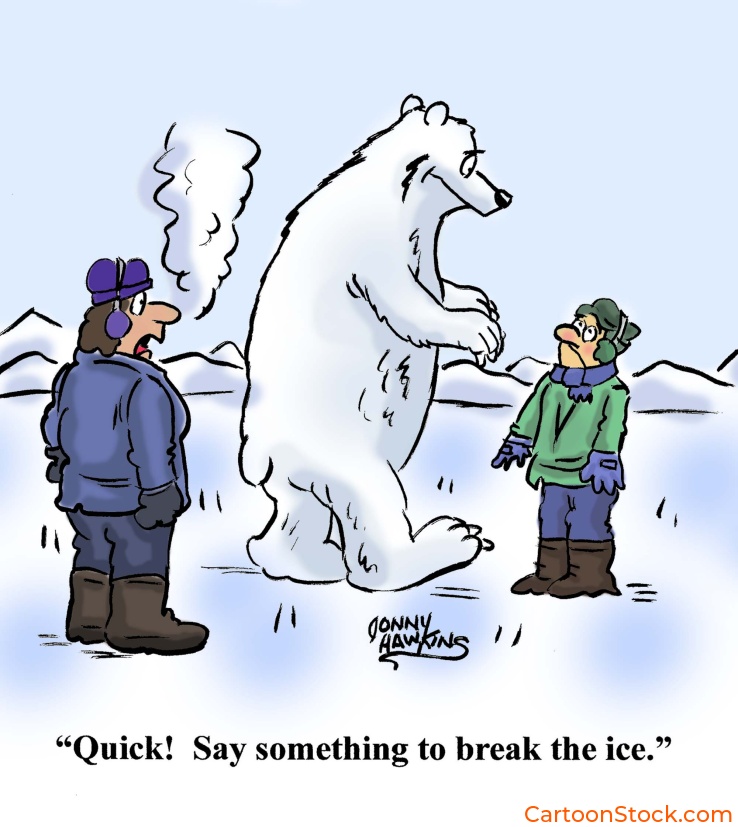
Cartoons for sensitive workplace conversations can be surprisingly effective. Where corporate language often tiptoes or over-explains, cartoons cut straight to the point with a touch of humor that softens the edges. When used thoughtfully, they can open up important conversations that might otherwise feel uncomfortable, confrontational, or even avoided altogether.
For a more in depth guide please see -> Using Cartoons to Support Diversity, Inclusion & Belonging
Humor helps people lean in, not shut down
Diversity, inclusion, and equity discussions often bring up real emotions. Whether it’s addressing bias, microaggressions, privilege, or generational misunderstandings, people can become defensive or disengaged. That’s exactly where cartoons can help.
A single-panel cartoon, used at the start of a workshop or included in a slide deck, signals that this conversation won’t be dry or judgmental. It shows a willingness to acknowledge the hard stuff—with humanity. Humor doesn’t trivialize sensitive topics; it makes them more accessible.
Why cartoons work for tough conversations
Cartoons for sensitive workplace conversations offer unique advantages over traditional communication tools:
-
They lower emotional resistance. Laughter disarms defensiveness and creates openness.
-
They promote psychological safety. People feel less targeted when humor sets the tone.
-
They reveal double standards. A well-drawn cartoon can highlight the absurdity of a workplace bias more powerfully than a bullet-point list ever could.
-
They spark reflection. People often see themselves in the cartoon—and start thinking differently as a result.
When to use cartoons in difficult dialogues
Cartoons are especially useful at the beginning of sensitive discussions to:
-
Warm up a group and establish trust
-
Illustrate a common workplace bias or blind spot
-
Challenge assumptions without direct confrontation
-
Encourage participants to share personal experiences
They’re also valuable in follow-up materials, internal newsletters, or learning reinforcement, offering gentle reminders of previous discussions.
Tips for using cartoons in inclusive dialogue sessions
If you’re a DEI consultant, team leader, or HR facilitator, here are some best practices:
1. Choose cartoons that highlight behaviors, not individuals
Avoid anything that could be read as mocking a specific group. Instead, focus on systems, stereotypes, or absurd policies.
2. Ask open-ended questions
Don’t explain the cartoon. Instead, use prompts like:
-
“What’s going on in this cartoon?”
-
“Does this reflect something you’ve experienced?”
-
“What would you change to make this situation more inclusive?”
3. Don’t rely solely on the humor
Cartoons work best as conversation starters, not standalone lessons. They set the stage, but you still need skilled facilitation and a respectful space.
The risks of getting it wrong, and how to avoid them
Cartoons are powerful, but they’re not neutral. A poorly chosen cartoon can backfire, reinforce harmful stereotypes, or alienate the very people you’re trying to include.
To avoid this:
-
Vet your choices with a diverse review group
-
Avoid sarcasm aimed downward (i.e., mocking those with less power)
-
Consider including cartoons that come from underrepresented cartoonists and voices
-
Use licensing sources that curate inclusive humor carefully (like CartoonStock)
Final thought: humor doesn’t solve everything, but it opens the door
Starting a hard conversation takes courage. Using a cartoon isn’t about making light of serious issues—it’s about making space. Humor softens the blow, lowers the guard, and—crucially—helps people actually hear each other.
Q&A: Cartoons for Sensitive Conversations
Q: Are cartoons appropriate for serious workplace topics like racism or gender bias?
A: Yes, when thoughtfully chosen. Cartoons can help people face uncomfortable truths by framing them in a more accessible, less defensive way.
Q: What if someone doesn’t find the cartoon funny?
A: That’s okay. Cartoons are meant to spark reflection, not always laughter. Focus on the insight or perspective it opens up.
Q: Should the cartoon come before or after the discussion?
A: Usually before. It helps set the tone and encourages participation. It can also be used as a follow-up to reinforce key takeaways.
Keep reading
Next step: The role of cartoons in building belonging across hybrid and remote teams