



Getting Work Ready for Submission Once you understand how licensing works and how royalties accumulate, the practical question becomes: what needs to be ready before submitting? The answer involves understanding what makes cartoons licensing-ready—whether you’re working with evergreen ideas or topical editorial work. Part of our comprehensive guide: International Cartoon Licensing: A Complete Guide for…
Continue Reading…
Have Something Specific in Mind?
Cartoons for Teachers: How Cartoons can Increase Student Attention and Engagement
Caption Contest Commentary
“Fruity Wedding” Caption Contest Commentary with Lawrence Wood
Recent Posts
Preparing Your Cartoons for International Licensing Submission

Copyright Protection for International Cartoon Artists
The Ownership Question Copyright is often the biggest source of anxiety for international cartoonists considering licensing. What rights do you keep? What rights are you giving away? And how does copyright work once your cartoons are used across borders? The core answer is straightforward: you retain copyright. Licensing grants permission for specific uses—it doesn’t transfer…
Continue Reading…
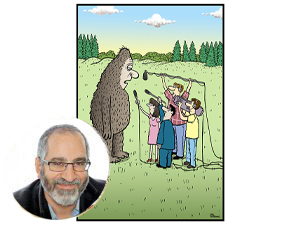
“Bigfoot and Reporters” Caption Contest Commentary with Lawrence Wood
Cartoonist Bill Whitehead helped judge last month’s contest, which featured his drawing of a creature who looks like Bigfoot talking to a group of reporters, one of whom has a camera, in the woods. The creature’s nose is unusually large and he looks weary, as though he’s tired of the reporters’ questions. Bill’s original caption…
Continue Reading…
Understanding Royalties: What International Cartoonists Actually Earn
License this image The Income Model That Keeps Working When cartoonists ask about royalties, they’re asking about something genuinely different from most creative income: work that can generate revenue multiple times, across different markets, without additional effort after the initial creation. That’s the core advantage of cartoon licensing royalties. Create the cartoon once, and it…
Continue Reading…
Why Culturally Specific Cartoons Sell Better Than You Think
License this image The Specificity Paradox Here’s what most cartoonists get backwards: they think “niche” means “limited.” You’ve probably second-guessed a cartoon because it referenced something too local, too specific, too yours. Maybe it was a workplace dynamic unique to your country, a social situation that wouldn’t translate elsewhere, or humor rooted in cultural context…
Continue Reading…
How Multilingual Licensing Expands Your Cartoon’s Reach
The Language Question One of the quiet worries international cartoonists carry into licensing is language. Do cartoons need to be in English to sell? Will captions limit where work can be used? Does working in a non-English language shrink the market before it even begins? Multilingual licensing exists precisely to remove those constraints. However, it…
Continue Reading…