

Part of our History & Art of Cartoons guide
Single-panel cartoons are deceptively simple. One image. One caption (if that). And yet, in that small space lies the power to amuse, provoke, educate—or all three at once. While comic strips and animated features often take the spotlight, the single-panel cartoon has carved out its own artistic niche. It’s not just a format. It’s a distinct storytelling tradition.
A Brief History of Brevity
The roots of single-panel cartoons stretch back centuries. Think of 18th-century caricatures and illustrated broadsheets: a lone image delivering social or political commentary to a mass audience. These proto-cartoons offered quick visual hits of satire and observation, much like today’s memes.
As print media expanded in the 19th and early 20th centuries, so did the demand for punchy, standalone visual content—enter the golden age of magazine cartoons. Publications like Punch, The New Yorker, Esquire, and The Saturday Evening Post helped define the tone and style of the single-panel cartoon. These cartoons weren’t throwaway jokes; they were the soul of the editorial page.
Cartoonists like George du Maurier, James Thurber, Charles Addams, and Peter Arno became legends for their wit, minimalism, and ability to say something profound (or hilarious) in a few square inches of print.
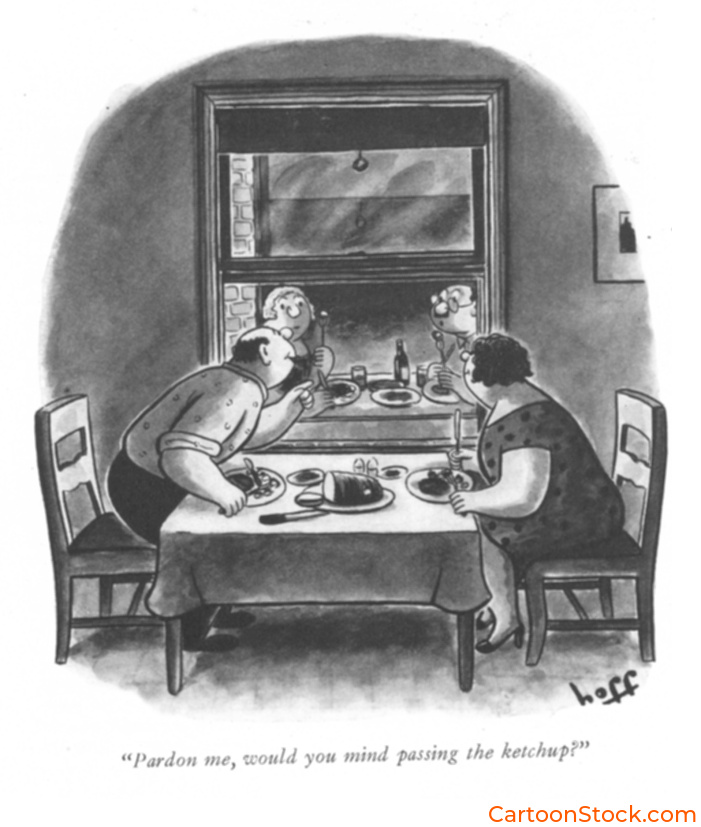
Below: Cartoon by Syd Hoff, published in The New Yorker in 1940
Why Single-Panel Cartoons Work in One Frame
The real magic of a single-panel cartoon lies in its economy. It asks a lot of the reader: make a cognitive leap, spot the visual gag, understand the context—and ideally, chuckle. This demand for active engagement is part of its charm. It also makes the format uniquely powerful for editorial commentary and observational humor.
Cartoonists must choose every element with precision: composition, expression, caption wording, negative space. There’s no room for fluff. And because the form is self-contained, it can tackle anything from dense philosophical ideas to pop culture trends in a single, digestible frame.
The Craft Behind the Panel
The best single-panel cartoons feel effortless—but behind the scenes, they’re anything but. Cartoonists often sketch multiple versions of a joke, tweaking everything from a character’s posture to the rhythm of a caption. The space is tight, and every pixel has to earn its place.
What makes the format so distinct is how it relies on visual suggestion. A raised eyebrow. A carefully placed object. A word with double meaning. Unlike comic strips, which can use dialogue and time progression, single-panels use implication, irony, and visual shorthand.
The result? A punchline that lives in the reader’s head.
From Gag to Commentary
Not all single-panel cartoons aim for laughs. Some challenge political systems, question social norms, or highlight uncomfortable truths. Editorial cartoonists—past and present—use the format to distill complex issues into a single, unforgettable image.
Think of Herblock’s takedowns of McCarthyism. Or New Yorker cartoons that skewer Wall Street hubris. Or cartoons during the pandemic that captured our shared weirdness with eerie precision.
When used well, a single-panel cartoon can feel like an entire op-ed in miniature.
Single-Panel Cartoons in the Modern World
Despite the dominance of digital media, and maybe even because of it, single-panel cartoons are thriving in new environments. Their format is perfect for online sharing, where attention spans are brief but the appetite for sharp insight is strong.
Today, single-panel cartoons show up in:
-
Newsletters and blogs
-
Social media (especially Instagram and LinkedIn)
-
Business presentations
-
Online courses and e-learning
-
Greeting cards, merch, and marketing campaigns
And thanks to digital archives and licensing platforms, these cartoons are easier than ever to access and share.
Want to use a single-panel cartoon in your content or communications? We can help with that, visit us at CartoonStock.com
A Style All Its Own
Over time, the single-panel cartoon developed stylistic norms distinct from comic strips or comic books. The art tends to be more minimal, with attention drawn to visual wit and timing. It often eschews speech bubbles in favor of captions, creating a dialogue between image and text rather than within the frame itself.
Cartoonists like Roz Chast, Edward Koren, Liana Finck, and Charles Barsotti have each made the format their own. Their drawings are instantly recognizable—proof that even within this compact form, personal voice shines through.
Q: What makes a single-panel cartoon different from a comic strip?
A: A single-panel cartoon tells a complete story or delivers a punchline in one frame. Comic strips typically involve multiple panels, ongoing characters, and a sequence of actions. The single-panel format relies on concise storytelling, visual suggestion, and reader inference to communicate its message instantly.
Keep Reading
Curious about how cartoon art has changed over time? Check out The Evolution of Cartoon Art: From Hand-Drawn to Digital