

Drawing the War from Inside
My name is Ruslan Pikhota. I am a Ukrainian artist and a serving officer in the Armed Forces of Ukraine. Since February 2022, while taking part in the defence of my country, I have been drawing the war from inside it.
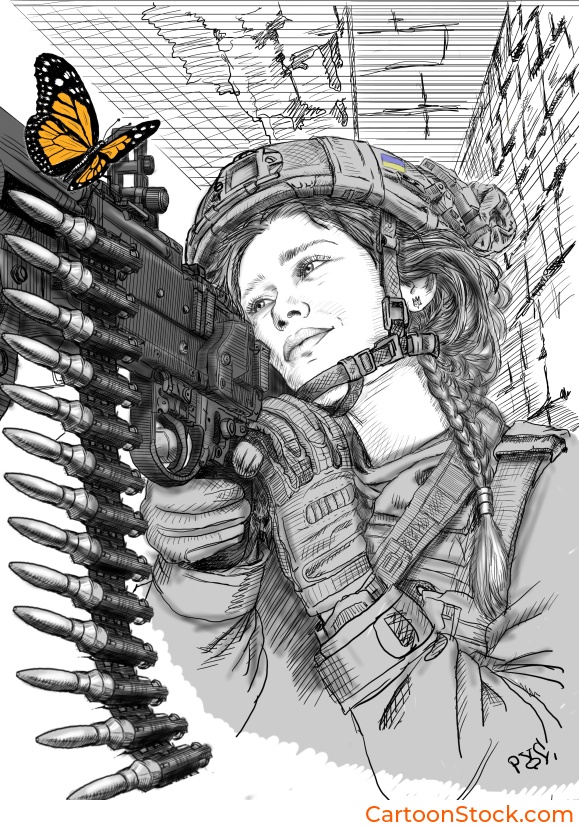
I did not begin this project as a planned series. At first, drawing was simply a way to stay human. War fills your days with noise, fear, exhaustion, absurdity and loss. You need somewhere to put all of that. For me, that place became the page.
Over the past four and a half years I have created more than 550 drawings. Some were made in trenches and dugouts, some in ruined buildings, some during short pauses between military tasks. They show infantrymen, drone operators, wounded soldiers, civilians, death, fatigue, friendship and the strange humour that appears in places where humour should probably not exist at all.
Black humour is an important part of my work because it is an important part of soldiers’ lives. It is not disrespect for tragedy. Quite the opposite. Sometimes humour is the last psychological defence a person has. When reality becomes unbearable, a joke can give you a few seconds in which you are still yourself.
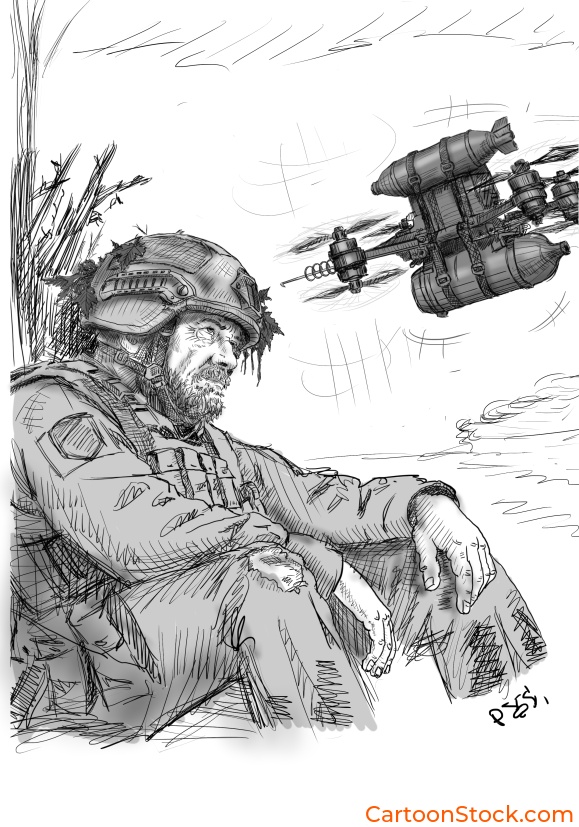
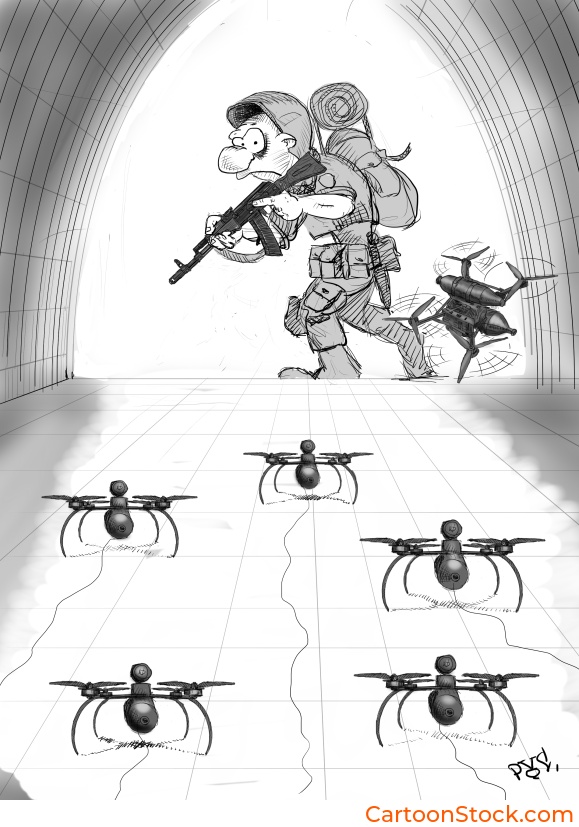
The war has also changed enormously since 2022, and the drawings have changed with it. Drones, FPV attacks, electronic warfare and unmanned systems have transformed the battlefield. Machines now watch, hunt and kill. Yet in the centre of every drawing there is still a human being — frightened, tired, angry, wounded, stubborn, sometimes ridiculous, but alive.
Some of my work is clearly cartooning. Other drawings are closer to reportage or documentary drawing. They come from situations I have seen, experienced or learned about directly during service. I am interested not only in the event itself, but in the small human detail that explains it: a gesture, a look, a joke, an exhausted posture, the silence after something has happened.
One drawing shows a woman with a child framed like a religious icon. Another shows an exhausted soldier carrying a child while a large military drone stands beside him. These are not heroic posters. For me, they are about vulnerability, responsibility and the way war places unbearable weight on ordinary people.
I do not try to make war beautiful. I also do not want to reduce it to horror alone. War contains fear and courage, cruelty and tenderness, death and ridiculous everyday life, often at the same time. That contradiction is what I try to record.
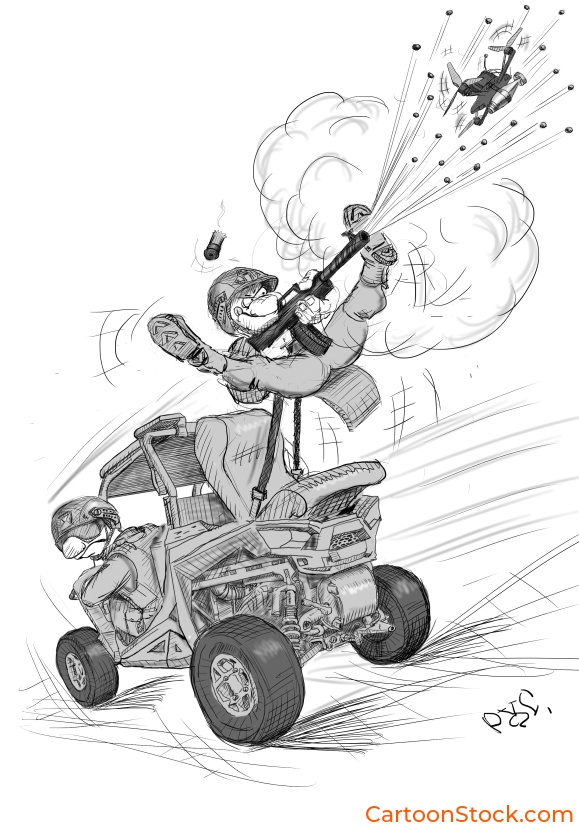
Today this collection has become a visual diary of the Russian-Ukrainian war as seen by someone living inside it. I hope the drawings can travel farther than I can — into newspapers, books, exhibitions and collections — and speak to people who may never see this war with their own eyes.
If they make someone stop for a moment, look closely, smile, feel uncomfortable, or understand one small thing about what this war does to people, then the drawing has done its job.
Ruslan Pikhota
Ukraine